

If you're finding yourself in a pickle over choosing between a pellet grill or a gas grill, take it easy. You are not alone. This decision is a common puzzle for both barbecue beginners and seasoned grill masters alike. After all, both pellet and gas grills bring their unique flavors and perks to the table.
So, in the grand debate of 'pellet grill vs gas grill', which one should you choose for your backyard cookouts?
Quick answer: Gas grills heat up faster (typically ready to cook in about 10–15 minutes) and cost less to buy and run day-to-day, making them the easier choice for beginners and quick weeknight cooking. Pellet grills cost more upfront and take a bit longer to reach temperature, but deliver real wood-smoke flavor and can smoke, roast, and bake in addition to grilling — better for anyone who cooks low-and-slow or wants oven-like versatility outdoors. See the full side-by-side comparison below.
Explore Grills at Arnold's
Looking to spice up your outdoor entertainment? Discover grills from top brands like Traeger, Lynx, Weber, and more at Arnold's Appliance today!
See GrillsPellet Grill vs Gas Grill
Before we dive into our grill recommendations, here is the need-to-know for gas grills vs pellet grills.
| Gas Grill | Pellet Grill | |
|---|---|---|
| Preheat time | About 10–15 minutes | About 15–20 minutes |
| Flavor | Neutral, char from direct heat | Wood-smoke flavor (hickory, mesquite, apple, cherry) |
| Cooking versatility | Grilling, searing | Grilling, smoking, roasting, baking |
| Upfront cost | Lower | Higher |
| Ongoing fuel cost | Propane or natural gas | Wood pellets (typically pricier per use) |
| Power needed | No (manual ignition on most models) | Yes (electric auger, igniter, controller) |
| Cleanup | Simpler, no ash | More maintenance, ash/pellet residue |
| Best for | Beginners, quick weeknight cooking | Flavor-focused, low-and-slow cooking |
Pellet Grills:
Pellet grills are innovative grills that rely on wood pellets as their fuel source, infusing your food with the distinct aroma and taste of hardwood smoke. From hickory and mesquite to apple and cherry, there's a wide variety of pellet flavors to explore, allowing you to create a symphony of flavors right in your backyard.
One of the key advantages of pellet grills is their versatility. With precise temperature control, you can easily adjust the heat to achieve the perfect cooking conditions for various dishes. Whether you're smoking low and slow, roasting, baking, or grilling at high temperatures, a pellet grill can handle it all.
Gas Grills:
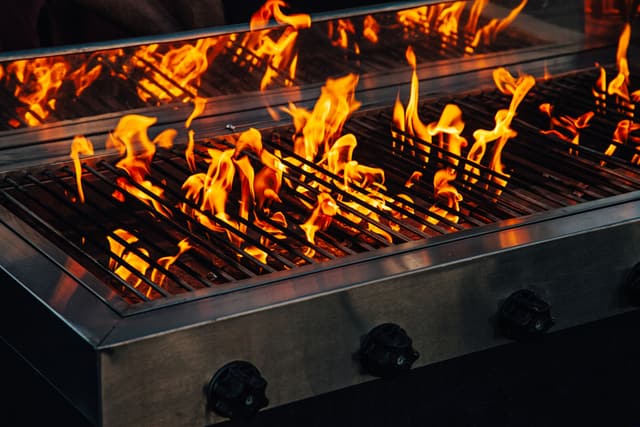
When it comes to convenience and speed, gas grills take the crown. Powered by either propane or natural gas, these grills offer a quick and easy way to fire up your outdoor cooking. With just the turn of a knob, you'll have an instant flame, ready to sear your steaks or grill your vegetables to perfection.
What sets gas grills apart is their ability to reach high temperatures quickly. This makes them excellent for achieving those coveted grill marks and a beautiful caramelization on your food. Additionally, most gas grills come with multiple burners, allowing for versatile cooking zones. You can simultaneously cook different types of food at various heat levels, giving you the flexibility to cater to everyone's preferences.
In terms of maintenance, when considering gas vs pellet grill, gas grills are relatively easy to clean, with removable grates and grease management systems that help keep things tidy. They also offer consistent heat distribution and temperature control, making them a reliable option for both novice and seasoned grill masters.
Understanding Grill Types: Gas Grill vs Pellet Grill vs Other Grills
A sizzle on the grill, the tempting aroma wafting through the air - there's something simply magical about an outdoor cookout. But for grilling newcomers, figuring out all these different types of grills can seem like a lot at first. So, let's untangle this confusion and explore the different types of grills you could consider.
Gas Grills
First off, we have gas grills. Widely popular for their convenience and speed, gas grills can be powered by either propane or natural gas. Should you be someone who cherishes spontaneous BBQs and values a grill that gets hot swiftly, then you might find a gas grill suits your style perfectly. Moreover, when it comes to gas grills vs pellet grills, gas grills often win points for their ability to achieve high temperatures fast, ideal for searing meats to perfection.
➥ Weber Grills® 2200™ Titanium Gas Grill

The Weber Grills® 2200™ Titanium Gas Grill is a compact and convenient option with features like porcelain-enameled, cast-iron cooking grates, electronic ignition, a built-in lid thermometer, folding side tables, and a durable cast aluminum lid and body. Its glass-reinforced nylon frame ensures stability while being lightweight, and the removable catch pan makes cleaning hassle-free. With the infinite control burner valve, you can achieve precise heat control for perfect cooking results.
➥ Coyote Outdoor Living C-Series 28" Free Standing Grill-Stainless Steel

The Coyote Outdoor Living C-Series 28" Free Standing Grill-Stainless Steel offers a compact and versatile grilling solution for small spaces and urban living. With powerful performance, interior grill lighting, and durable stainless steel construction, it provides convenience and quality cooking for outdoor enthusiasts.
➥ Weber Grills® Genesis 62" Black Smart NG Freestanding Grill with Side Burner and Nightvision

The Weber Grills® Genesis 62" Black Smart NG Freestanding Grill with Side Burner and Nightvision revolutionizes backyard grilling with its versatile cooking options, Weber Connect smart technology, extra-large sear zone, Night Vision LED lighting, side burner, and expandable top cooking grate.
Pellet Grills
Next up, we have pellet grills. These units, often praised for their incredible flavor infusion, utilize hardwood pellets for cooking. And there's more to pellet grills than just their smoky flavor. Imagine having the precision of your kitchen oven, but outside. That's what pellet grills bring to the table in the debate of wood pellet vs gas grills.
➥ Traeger® 46" Black Ironwood 650 Pellet Grill
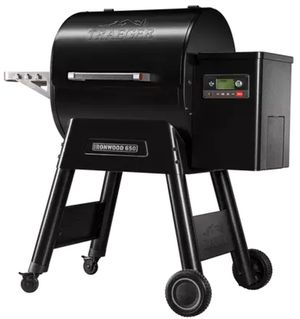
Elevate your grilling experience with the Traeger® 46" Black Ironwood 650 Pellet Grill. Control and monitor your grill remotely with the Traeger App, ensuring precise temperatures and mouthwatering flavors with Super Smoke Mode.
- The built-in meat probe, double side-wall insulation, and pellet sensor provide convenience and consistent performance.
- With all-terrain wheels and convenient features, this grill takes your outdoor cooking to the next level.
➥ Coyote 28" Stainless Steel Free Standing Pellet Grill

Upgrade your outdoor cooking with the Coyote 28" Stainless Steel Free Standing Pellet Grill. This grill brings the sophistication and versatility of a luxury indoor appliance to your outdoor space.
The smart drop pellet system enhances the flavors of your food with a variety of wood pellets. Enjoy the convenience of a spring-assisted hood, durable stainless steel construction, and intuitive controls for an elevated grilling experience.
➥ Coyote 28" Stainless Steel Built-In Pellet Grill

Experience outdoor cooking at its finest with the Coyote 28" Stainless Steel Built-In Pellet Grill. Combining the sophistication of a luxury indoor appliance with superior functionality, this grill offers a state-of-the-art digital touch screen and precise temperature control for precise cooking.
The smart drop pellet system allows you to enhance flavors with a variety of wood pellets. Enjoy the convenience of a spring-assisted hood, interior grill lighting, and versatile cooking surfaces. With durable stainless steel construction and intuitive controls, this grill brings luxury and convenience to your outdoor cooking.
Other Grill Types
But what about propane grills? Aren't they similar to gas grills? Indeed, they fall under the gas grill category, but they use propane as their fuel source. Propane grills are often portable and can reach high temperatures quickly, making them a popular choice for camping or tailgating.
Charcoal Grills
Charcoal grills, be it those using briquettes or lump charcoal, bring something unique to the table - that unmistakable smoky zing to your food. Achieving this flavor with gas or pellet grills? Well, that's quite a task. Sure, they demand a bit more time and patience to get started and to keep them going. But for many grillers out there, the extra effort is a fair trade for the lip-smacking smoky delight they deliver. Charcoal also tends to burn hotter than gas or pellet grills, which makes it a favorite for high-heat searing and traditional live-fire cooking.
Browse our full lineup of charcoal grills, or see our picks in Best Charcoal Grills for Backyard BBQs if you want the deep-dive on this option.
Kamado (Ceramic) Grills
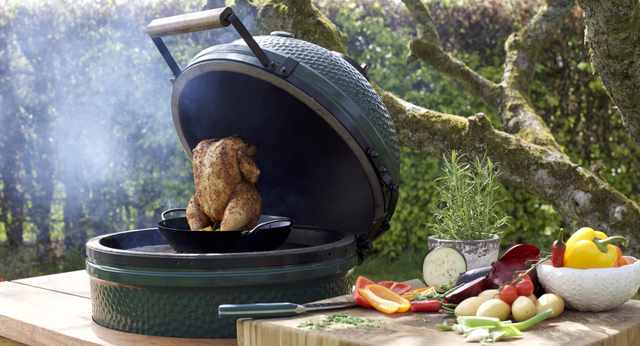
Kamado grills are the thick-walled, egg-shaped charcoal grills you've likely seen from brands like Kamado Joe, Weber, and Lynx. Their heavy ceramic or steel-lined construction holds heat with remarkable efficiency, letting you sear at 700°F+ one weekend and hold a steady 225°F smoke the next — all from the same appliance and a single load of lump charcoal. That heat retention also means better fuel efficiency than a standard charcoal grill for long cooks, though kamado grills are heavier, pricier, and slower to cool down between uses. We carry kamado-style charcoal grills and accessories alongside our other charcoal grill selection.
Flat-Top Griddles
If your cookouts involve smash burgers, breakfast spreads, stir-fry, or anything that benefits from an even, oil-slicked cooking surface, a flat-top griddle deserves a look. Griddles use direct, consistent heat across a solid steel or cast-iron surface rather than open grates, so there's no flare-up risk from dripping fat and no food falling through the grates — a real plus for delicate items like fish, vegetables, and eggs. Many households now run a griddle alongside a gas or pellet grill rather than choosing just one. See our current outdoor griddles selection to compare sizes and burner counts.
Electric Grills
Electric grills are perfect for those living in apartments or areas with fire restrictions, as they don't produce open flames. You just plug it in, and you’re all set to fire up the grill and embark on a sizzling grilling adventure. While you won't get that smoky flavor, electric grills offer a fuss-free and smokeless way to enjoy grilled foods, and many condo and apartment buildings that prohibit propane or charcoal grills on balconies still allow electric models — always double-check your building's specific policy first.
Learn more: 5 Fantastic Built In Grills for Summertime, or if you're planning a full outdoor cooking space, see our outdoor kitchen cabinet ideas and what to know about outdoor kitchen pizza ovens.
How Much Does It Cost to Run a Gas Grill vs a Pellet Grill?
Upfront price is only part of the cost equation — fuel adds up differently for each type, and it's one of the questions we hear most from first-time buyers.
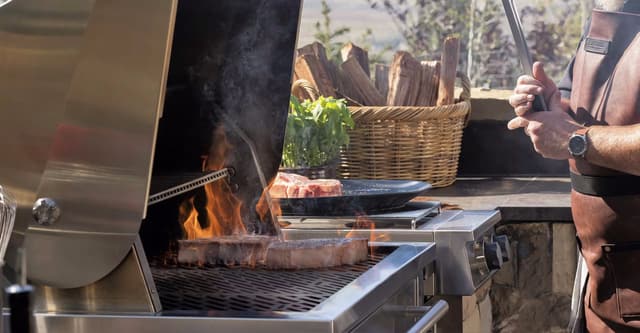
Gas grills: A 20 lb. propane tank typically costs around $20–$25 to fill or exchange and can run a standard two- or three-burner grill for roughly 18–20 hours of total cook time, which works out to well under a dollar or two per average grilling session. A natural gas hookup is even cheaper per use since you're drawing from your home's gas line rather than swapping tanks.
Pellet grills: Wood pellets generally run about $1–$2 per pound, and a pellet grill burns roughly 1–3 lbs. per hour depending on the temperature and how well-insulated the unit is. A typical 3–4 hour smoke session can use several pounds of pellets, so per-session fuel costs usually land higher than a comparable gas grill cook, even though pellets themselves aren't necessarily "expensive" pound for pound.
These are typical, directional ranges based on average national pricing and average usage — your actual cost will vary by tank/pellet pricing in the Seattle area, grill size, insulation quality, and how often you cook.
Temperature Range and Cooking Capabilities
Temperature range is one of the clearest ways to see why these two grill types serve different cooking styles.
- Gas grills typically run from about 300°F up to 500–550°F, with some infrared or dedicated sear-burner models reaching higher for steakhouse-style crust. That range is built for direct-heat grilling and searing rather than gentle low-and-slow cooking.
- Pellet grills typically span a much wider low end — often 165–225°F for "Super Smoke" or true low-and-slow smoking — up through 450–500°F on models with a sear or high-heat mode, which is what lets a single pellet grill smoke a brisket in the morning and sear steaks that evening.
In short, if your cooking is mostly direct grilling and searing, a gas grill's range covers you well. If you want to smoke, slow-roast, and bake — in addition to grilling — a pellet grill's wider low-temperature range is the bigger advantage.
Next, let's discuss the pros and cons of each grill type.
Pros
Flavorful Cooking
If it's all about flavor for you, pellet grills have an edge. They use wood pellets, adding a distinct smoky, woody taste to your food that's hard to beat. This wood pellet grill vs gas grill factor is often a deal-breaker for many.
Precision Temperature Control
Pellet grills are almost like outdoor ovens. You can set your desired cooking temperature, and the grill maintains it by feeding the right amount of pellets into the fire. This precision allows for a wide variety of cooking methods, from smoking to baking.
Easy to Use
Modern pellet grills come with digital controls in that you can just set the temperature and let the grill do its thing. It's as simple as that.
Quick and Convenient
In the pellet vs gas grill debate, gas grills shine in terms of speed and convenience. They heat up quickly and offer easy temperature control. You can turn up the heat for a searing steak or tone it down for gentle cooking.
Cost-effective
Gas grills are generally more affordable, and the fuel - natural gas or propane - is less expensive than wood pellets. This makes gas grills a cost-effective choice in the long run.
Easy to Clean
Gas grills are simpler in design and hence easier to clean. There's no ash residue to worry about, unlike with pellet grills.
Cons
Price and Maintenance
Pellet grills are generally more expensive than gas grills. Additionally, they require electricity to run the controls and auger system, and you'll need to regularly buy wood pellets. So, the cost of owning a pellet grill can add up.
Slow to Heat
Compared to gas grills, pellet grills take longer to heat up. So, if quick grilling is your preference, you might need to consider this factor.
Complex Mechanism
While pellet grills are easy to use, their mechanisms are more complex than gas grills, which could potentially mean more repairs down the line.
Flavor
The one area where gas grills fall short compared to pellet grills is the lack of smoky, woody flavor. While some high-end models offer smoke boxes to add some of that flavor, it's not the same as what you get with a wood pellet grill.
Hotspots
Gas grills can often have uneven heating, with certain areas getting hotter than others. This could lead to uneven cooking if not managed carefully.
Pellet grills vs gas grills - the choice ultimately boils down to your cooking style and preferences. Both types have their strengths and weaknesses, but either way, you're in for some fabulous grilling experiences. Happy cooking!
Learn more: 7 Tips to Grill Burgers Like a Pro!
How Long Do Gas and Pellet Grills Last?
With regular cleaning and a good-quality cover, a well-built gas grill typically lasts 5 to 15 years, with burners, igniters, and cooking grates being the parts most likely to need replacement over time. Pellet grills typically last 5 to 10 years; because they rely on an electric auger motor, igniter rod, and digital controller to function, those components tend to determine a pellet grill's lifespan more than the exterior build does.
A few habits stretch the life of either type: cover your grill when it's not in use, clean grease traps and ash regularly, keep pellets stored somewhere dry (damp pellets can jam the auger), and check propane hoses and connections each season for wear. Browse grill accessories, including covers and cleaning tools, to help protect your investment either way.
Which Grill Fits Your Lifestyle?
If you'd rather match a grill to how you actually cook than compare specs line by line, here's a quick lifestyle guide:
| If you're… | We'd recommend… | |
|---|---|---|
| New to grilling and want something simple | A gas grill — easy heat control with a short learning curve | |
| Cooking quick weeknight dinners | A gas grill for fast preheat and cleanup | |
| Chasing the best possible smoke flavor | A pellet grill, hands down | |
| Hosting weekend gatherings and want to smoke, roast, and grill | A pellet grill for its all-in-one versatility | |
| Living in an apartment or condo with restrictions | An electric grill, or a compact gas model if permitted | |
| Set on traditional live-fire flavor and don't mind tending the fire | A charcoal or kamado grill | |
| Cooking breakfast, smash burgers, or delicate foods often | An outdoor griddle, on its own or alongside a grill | |
| Watching your budget closely | A gas grill for the lower upfront and ongoing fuel cost |
Food Safety: Grilling to the Right Internal Temperature
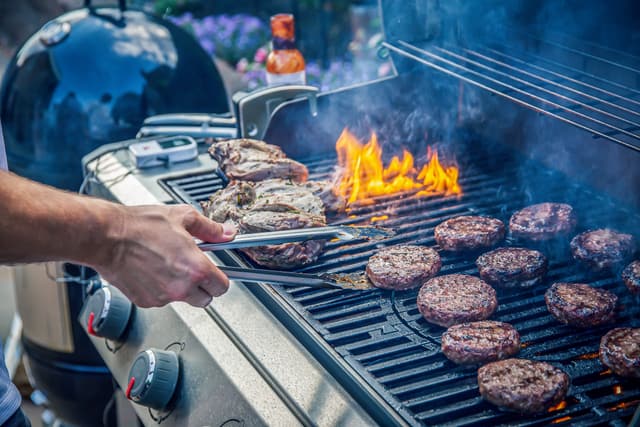
Whichever grill you choose, a reliable meat thermometer matters more than the fuel source when it comes to food safety. Cook time and grill-surface temperature are only a guide — the internal temperature of the food is what actually determines whether it's safe to eat. For up-to-date minimum internal temperatures for poultry, ground meats, beef, pork, and seafood, see the USDA's Safe Minimum Internal Temperature Chart. Many gas and pellet grills, including several models above, now include a built-in meat probe to make hitting these temperatures easier.
FAQ: Pellet Grill vs Gas Grill
Gas grills offer simplicity and heat control, ideal for beginners. Pellet grills provide a unique smoky flavor due to wood pellet usage.
If flavor matters most, opt for a wood pellet grill. The wood smoke infuses a distinct flavor that's tough to beat.
Gas grills typically offer more compact options, better for limited space. Just ensure your building allows grilling.
Gas grills may cost less initially, but propane refills add up. Wood pellets are less expensive, though pellet grills might cost more upfront.
A pellet grill uses wood pellets, providing heat and smoke for a unique flavor, maintaining the set temperature automatically. Gas grills use propane or natural gas, with manual temperature control knobs.
Yes, most pellet grills are designed for year-round outdoor use and can run in light rain or cold weather, though it's still smart to keep a grill cover on hand to protect the electrical components and auger system when it's not in use. Extreme cold can also increase pellet consumption and preheat time.
With regular cleaning and a quality cover, a gas grill typically lasts 5 to 15 years depending on build quality, while a pellet grill's electrical components (auger motor, igniter, controller) generally hold up for 5 to 10 years before needing service or replacement.
If wood-smoke flavor and cooking versatility (smoking, roasting, baking, and grilling in one appliance) matter to you, most pellet grill owners find the higher upfront cost worthwhile. If you mainly want fast weeknight grilling and want to spend less upfront, a gas grill delivers more value for that use case.
Many modern pellet grills, including models with a direct-flame or "sear mode" feature, can reach searing temperatures of 500°F or higher. Entry-level pellet grills without this feature are better suited to smoking, roasting, and baking than high-heat searing.
Yes. Pellet grills use an electric auger, igniter, and digital controller to automatically feed pellets and maintain temperature, so they need to be plugged into a standard outlet or run off a compatible generator or power station. Gas grills need no electricity to operate.
A pellet grill uses compressed wood pellets and an electric auger to automatically maintain a set temperature, while a charcoal grill uses briquettes or lump charcoal that you light and manage by hand. Charcoal grills give you more direct control over smoke intensity but require more hands-on attention than a pellet grill's "set it and forget it" operation.
Why Trust Arnold’s Appliance?
Arnold's Appliance started in the summer of 1956 when it opened its doors as Lakeshore Appliance in Redmond, Washington. John Arnold and his family have since grown the store from just a few brands to the large appliance store it is today and moved to Bellevue in 1999 in search of a larger building. Arnold’s Appliance now offers high-end innovative products from over 45 manufacturers.
In addition to extensive product knowledge, Arnold’s has been providing fine appliances to Northwest builders, remodelers, designers, architects, and developers for over 47 years. Arnold's currently supplies products and installations to many of the finest custom and spec home builders in the Pacific Northwest. Along with single-family housing, Arnold's has also supplied products for some of the largest multi-unit projects in the area. Arnold’s Now the third generation of the Arnold’s Family is dedicated to bringing the best quality products, delivery services, and installation to customers for years to come.
Stop by Arnold’s Appliance Bellevue, WA location to see what a difference buying locally with an experienced staff can make. Or shop gas and pellet grills online! Our friendly experts are always happy to help you choose the best gas or pellet grill — whether you call us at 425-454-7929, use our online chat feature, or visit us in person.
Learn more: The Top Cooking Accessories & Appliances for Dad this Father’s Day, Best High-End Grill Brands, or Best Charcoal Grills for Backyard BBQs